Dracula (1931)
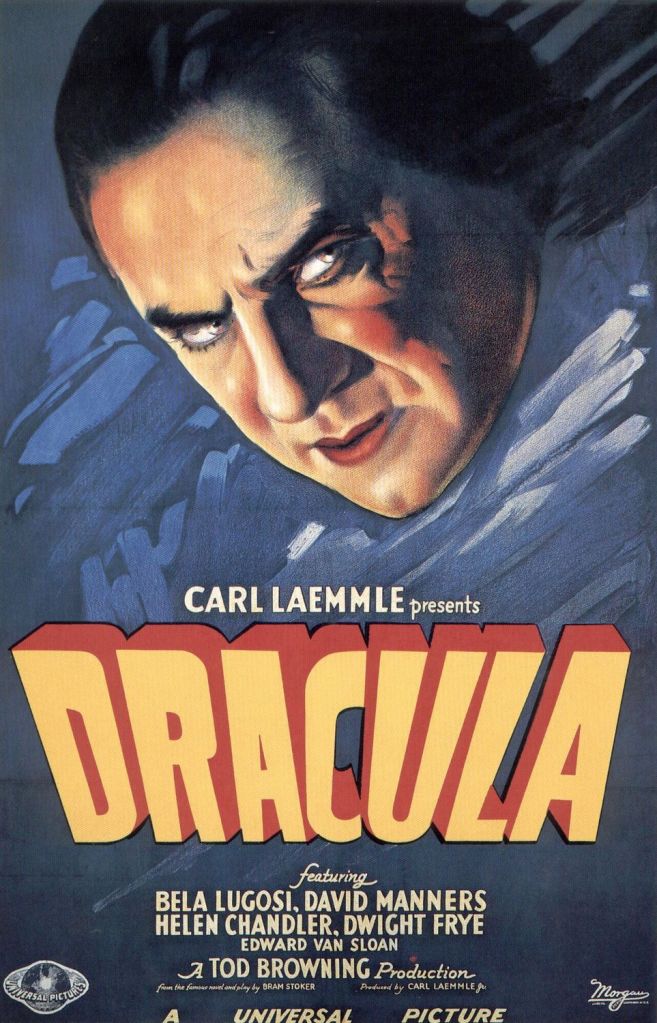
Cliché and convention have to begin somewhere. In 1931 Todd Browning’s film version of Dracula helped define what the horror genre would be like for the new age of talking film. Bram Stokers novel had already seen life as both a stage play and within silent film versions of the now classic story. But an indelible mark was left on this tale by the atmosphere of this film and in the now iconic performance of Bela Lugosi in the title role. Karl Freund, the great German cinematographer, was instrumental in setting the tone of the film by borrowing from the look of German expressionism. Coupled with the foreignness of Lugosi’s accent and look, American audiences were swept up in a world they were not accustomed to.
The mise en scene of Dracula is full of what have become horror movie staples. Dracula’s castle is shrouded in rolling fog and spider webs crisscross almost every frame within the castle; the visiting Renfield is photographed through these webs to enhance for the audience the knowledge that he is soon to be food for the bloodthirsty Count. Images of rats, bats, insects and strange animals scurrying about the grounds of the castle fill the screen. These early images heavily contrast with the later modern surroundings of London. Although the modern city is enveloped by fog, like our Counts homeland, the interiors couldn’t be more different. The London apartments fit more closely with an upper societal drawing room play than with Gothic horror.
The use of sound both lifts and detracts from the success of the film. In 1931 the limitations of sound technology forces the action to become stationary in later scenes. The static shots coupled with the empty quietness of background noise dates the film within those early days of talking pictures. The stage play feel also adds creakiness to the proceedings that may turn off modern audiences. Director Todd Browning finds ways to use the sound design of the film to his advantage though. Slow creaking doors announcing dread, the creatures of the night howling at the moon, squealing bats entering a room for a surprise fright; all of these things must have had an impact on the ears of an audience not accustomed to the sounds of horror. But the sound that is most important to cementing the classic status of this film and helped make it the success it became was the sound of Bela Lugosi’s voice. Born in Romania, Lugosi had an accent that sounded both cultured and menacing at the same time. His slow enunciations, old world manners and well-dressed image created an aura of seduction and adventure audiences of the day must have felt thrilled by.
Religious imagery highlights the idea of the modern world vs. the old world; giant wooden crosses loom in the background within the superstitious villagers Transylvanian countryside. The modern man Renfield is given a trinket cross for protection that momentarily keeps Dracula away. Dracula the undead is portrayed as the complete opposite of religion, the Anti-Christian. His dwellings are the antithesis of the church/temple, big and gothic the inside chambers are the corroded churches of a nightmare. He preys on his victims in an overtly sexual manner, taking them while they lay in bed while the intimacy of his sucking the blood from their necks consummates their entry into the undead. He is the embodiment of perverse sexuality, the kind you hear in fire and brimstone sermons, taking women out of wedlock as well as the homosexual implications of his male victims. The penetration of a phallic stake destroys the monster; the religious symbol of the cross is the only thing that keeps his animalistic lust in check. But it is his heart that must be penetrated for him to be destroyed; the organ that is the stand in for human love is the weak spot for this sexually immoral monster, this spreader of a vampiric disease.
Dracula, along with Frankenstein in 1931, were huge sensations for Universal studios which became synonymous with producing monster/horror movies. Todd Browning and Karl Freund created atmosphere and techniques that would help add to what eventually became conventions within the genre. But the stars aligned when Bela Lugosi stepped into this role, 90 years on and people still use his accent when they imitate Count Dracula. It is quite possible many of these imitators have never even seen this film outside of random clips, it has become a relic, an afterthought. Early in the film Dracula famously states in reference to the sound of howling wolves, “children of the night, what music they make!”, and we can feel the same joy just by listening to him utter those lines.
 The Stuff That Dreams Are Made Of